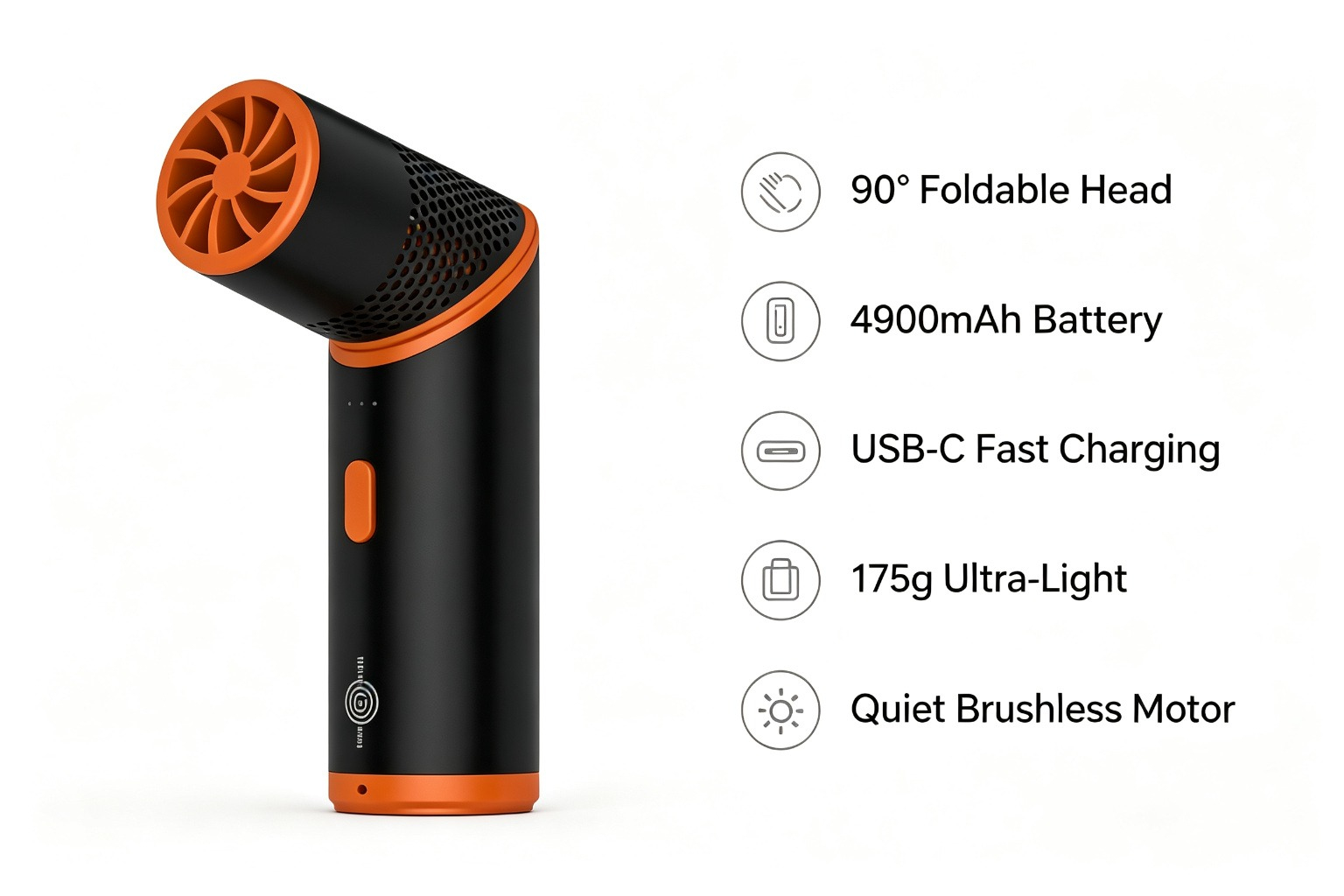
Foldable Handheld Fan: 2026 Guide to Portable Cooling Anywhere
When summer heat arrives, air conditioning is not always available. A foldable handheld fan becomes a practical tool for staying

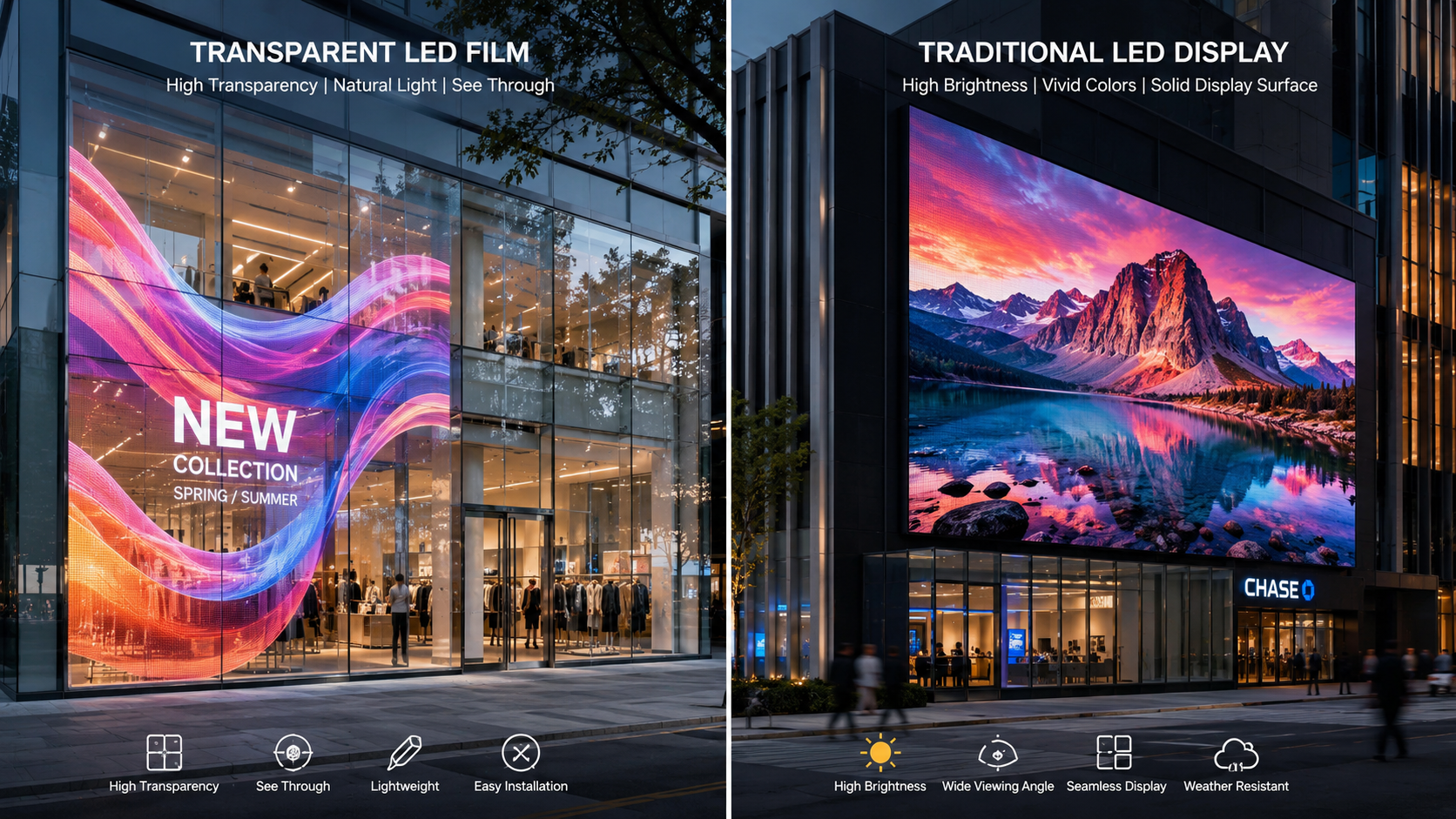
Transparent LED technology has transformed the way businesses integrate digital signage into modern architecture. Instead of relying on a single display solution, project owners now select LED systems based on building design, installation conditions, viewing distance, and communication goals.
Among today’s most widely used technologies, Transparent LED Film and Traditional LED Displays each offer distinct advantages for different applications.
LED Film turns existing glass surfaces into dynamic digital displays while maintaining transparency and natural daylight. Traditional LED Displays, on the other hand, provide exceptional brightness, image performance, and durability for applications where transparency is not required.
The right choice depends on your project’s priorities rather than on a single specification. Factors such as architectural design, installation requirements, display performance, maintenance, and long-term operating costs should all be considered before making a decision.
This comparison explains the strengths of both technologies to help architects, business owners, system integrators, and project managers select the most suitable solution.
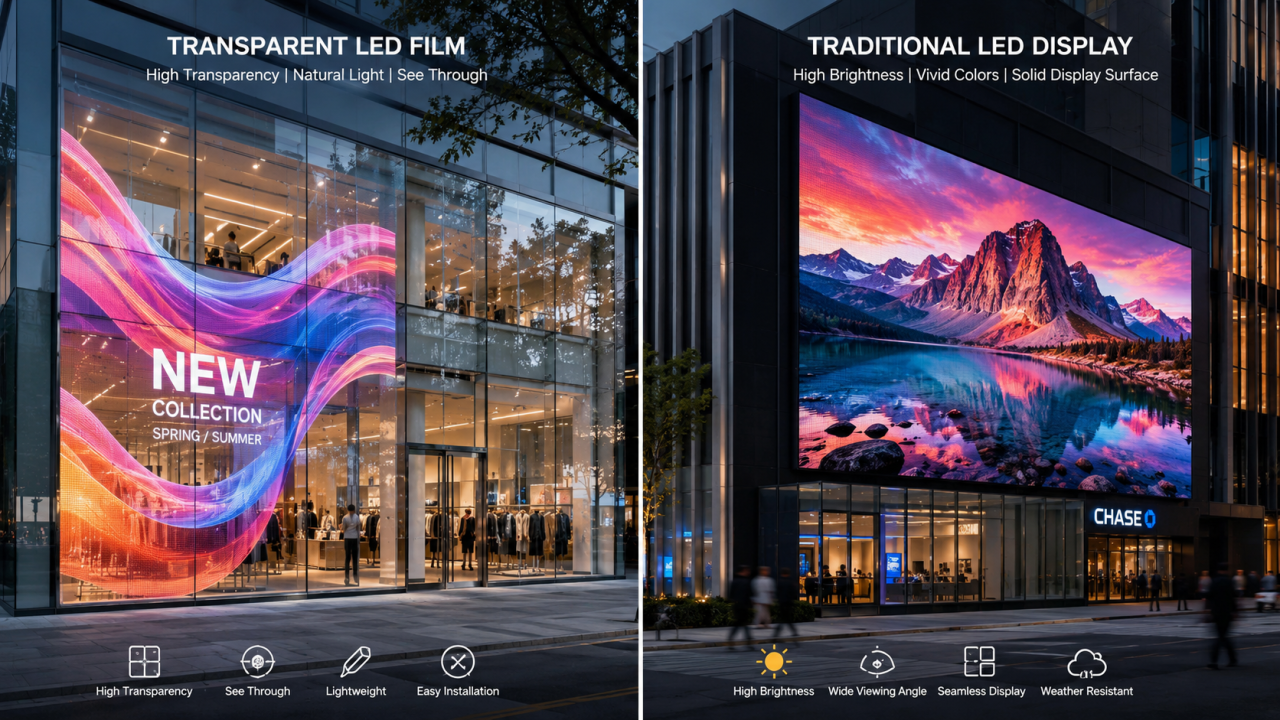
Transparency is the most significant advantage of LED Film. The display is installed directly onto glass or integrated within a slim supporting frame, allowing natural light to pass through while digital content is displayed.
Even during operation, people can still see through the glass, making the technology ideal for retail storefronts, shopping malls, airports, hotels, museums, office buildings, and other projects with glass façades.
Because the display blends naturally with the building envelope, it enhances digital communication without significantly changing the architectural appearance. For projects that value both advertising impact and modern aesthetics, LED Film provides an excellent balance between visibility and design.
Traditional LED Displays create a fully opaque display surface that becomes the primary visual feature of the installation. Since transparency is not part of the design, every LED pixel contributes to brightness, contrast, and color reproduction, resulting in outstanding visual performance.
These displays are commonly installed on solid walls, steel structures, building exteriors, stadiums, transportation hubs, and large commercial advertising installations where maximum display impact is the primary objective.
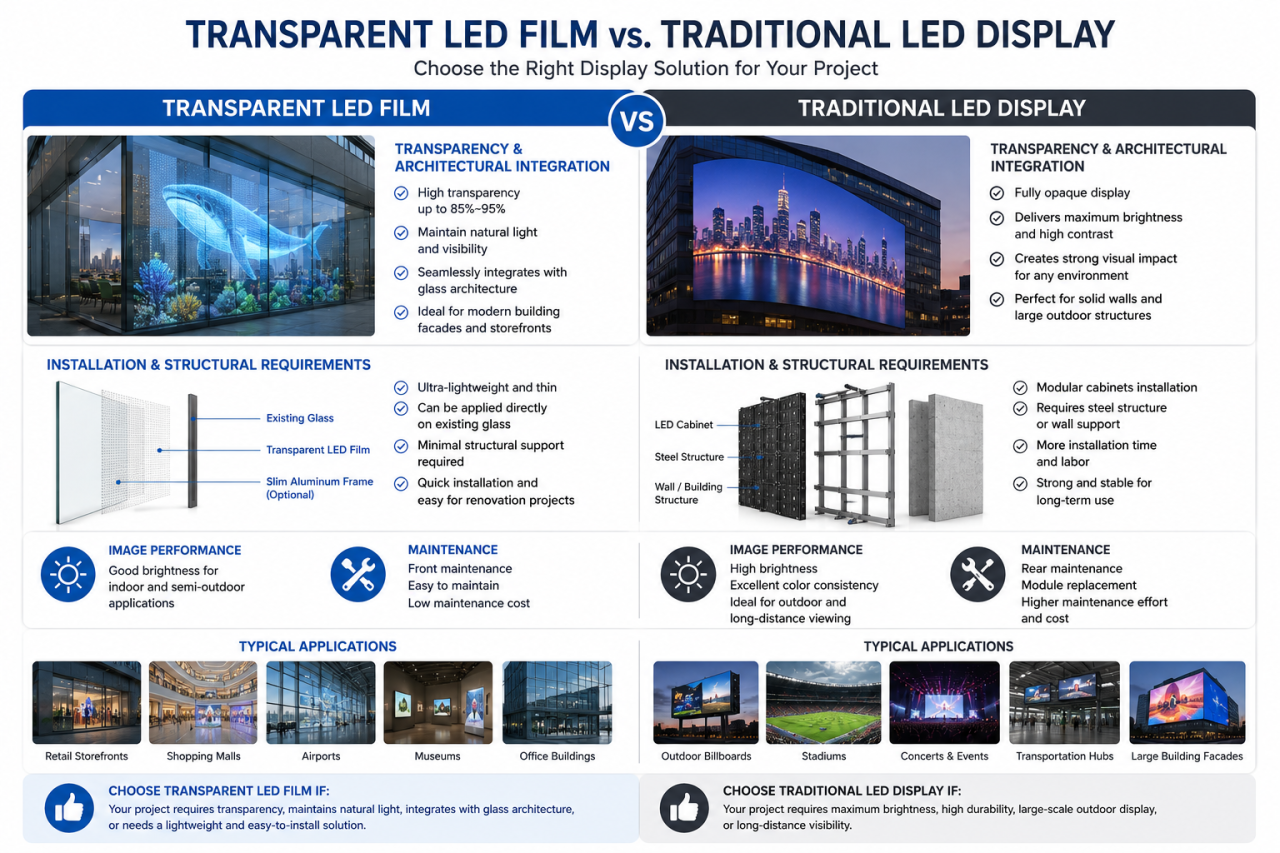
If your project includes glass curtain walls, storefront windows, or modern architectural façades,Transparent LED Film offers clear advantages by preserving transparency while adding digital content.
If your priority is achieving maximum brightness, long-distance visibility, or creating a large-format display on a solid structure, a Traditional LED Display remains an excellent choice.
LED Film is designed for lightweight installation. Depending on the product design, it can be applied directly to existing glass or installed within a slim aluminum frame, significantly reducing additional structural requirements.
Its lightweight construction minimizes building load, making it especially suitable for renovation projects, commercial storefront upgrades, and buildings where preserving the original structure is important.
Because installation is relatively straightforward, project timelines are often shorter, and disruption to daily business operations can be minimized.
Traditional LED Displays consist of modular LED cabinets supported by steel structures or wall-mounted systems. Large installations typically require detailed structural engineering to ensure safety and long-term stability, particularly for outdoor environments exposed to wind, rain, and varying weather conditions.
Although installation generally requires more time and supporting infrastructure, cabinet-based systems provide excellent durability, easy module replacement, and reliable performance for permanent commercial installations.
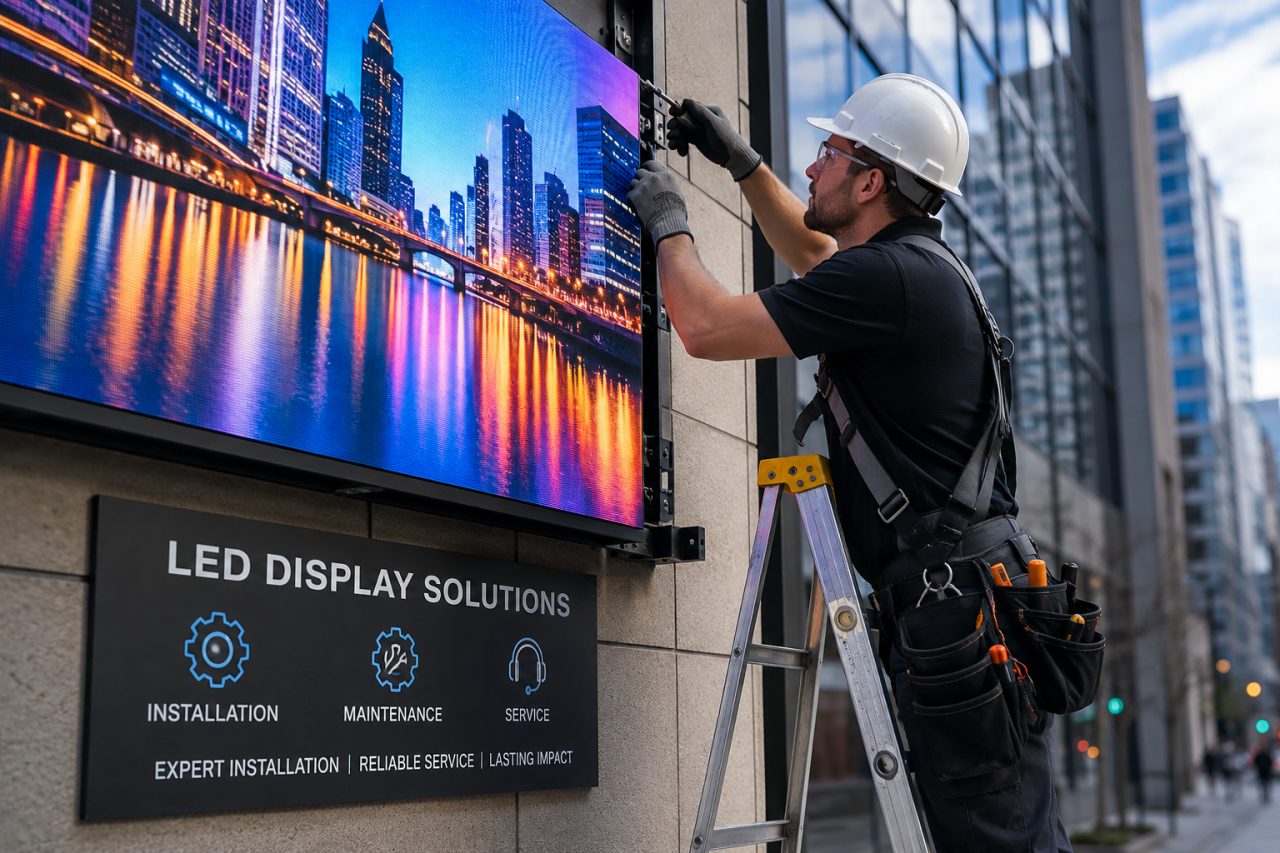
For projects where lightweight construction, simplified installation, and minimal structural modification are priorities, LED Film is often the preferred solution.
For applications that require large-format outdoor displays, high structural strength, or long-term fixed installations, Traditional LED Displays continue to provide proven reliability and performance.
When summer heat arrives, air conditioning is not always available. A foldable handheld fan becomes a practical tool for staying
Why AI Dashboards Need Clear Business Questions? Natural-language analytics makes it easy to ask a dashboard a question. The harder